


Digital leasing accelerated: from 7 days to less than 24 hours
OUTCOMES
What changed after the leasing process was automated?
From 7 days to less
than 24 hours
Application processing time dropped from 7 days to less than 24 hours thanks to process automation and a more structured workflow within a single platform. This resulted in faster, more predictable handling.
30% lower
operating costs
Operating costs fell by 30% thanks to less manual work, a more structured service model, and process automation. This gave the organization a more efficient and scalable operating model.
6–8 weeks instead
of 6 months
The time needed to launch new products dropped from 6 months to 6–8 weeks thanks to a more flexible process and less reliance on changes to core systems. This made it easier to expand the offering and respond faster to market needs.
PROJECT
Why did the leasing company decide to accelerate its financing process?
Our client, a leasing company operating in Poland, was looking for a more efficient way to manage its financing process. As demand grew and digital channels became increasingly important, the existing operating model no longer supported the pace, scale and flexibility the business required.
The process relied heavily on manual workflows and fragmented integrations, which slowed execution, increased operational effort and limited the rollout of new products. The goal of the transformation was to accelerate financing decisions, improve operational efficiency and create a scalable foundation for further growth in digital and partner channels.
PROJECT TIME
6 months
INDUSTRY
Leasing
COUNTRY
Poland
SERVICES AND SOLUTIONS
The client
Who have we helped?
Our client is a leading leasing provider in Poland, offering financing solutions for businesses across multiple segments and sales channels. The company focuses on combining speed, operational efficiency and a consistent customer experience across digital, partner and branch journeys.
REQUIREMENTS
Business Challenges
- Long decision and approval cycles:
Manual steps and fragmented workflows slowed down financing decisions and reduced process efficiency. - High operational effort:
A large share of manual handling increased operating costs and limited the team’s capacity to process growing volumes. - Limited scalability across channels:
The existing model did not provide a strong foundation for scaling digital, partner and branch-based financing journeys. - Slow rollout of new products:
Introducing new financing products and adapting journeys to business needs took too long. - Reduced competitive agility:
The organization needed to respond faster to changing customer expectations and competition from digital-first lenders.
ACTIONS
How was the leasing journey redesigned and automated?
The initial phase focused on reviewing the existing leasing process to identify manual bottlenecks, fragmented integrations and operational inefficiencies. This created a clear view of where automation and process redesign would deliver the highest value.
SOLUTION
Scope and delivery model
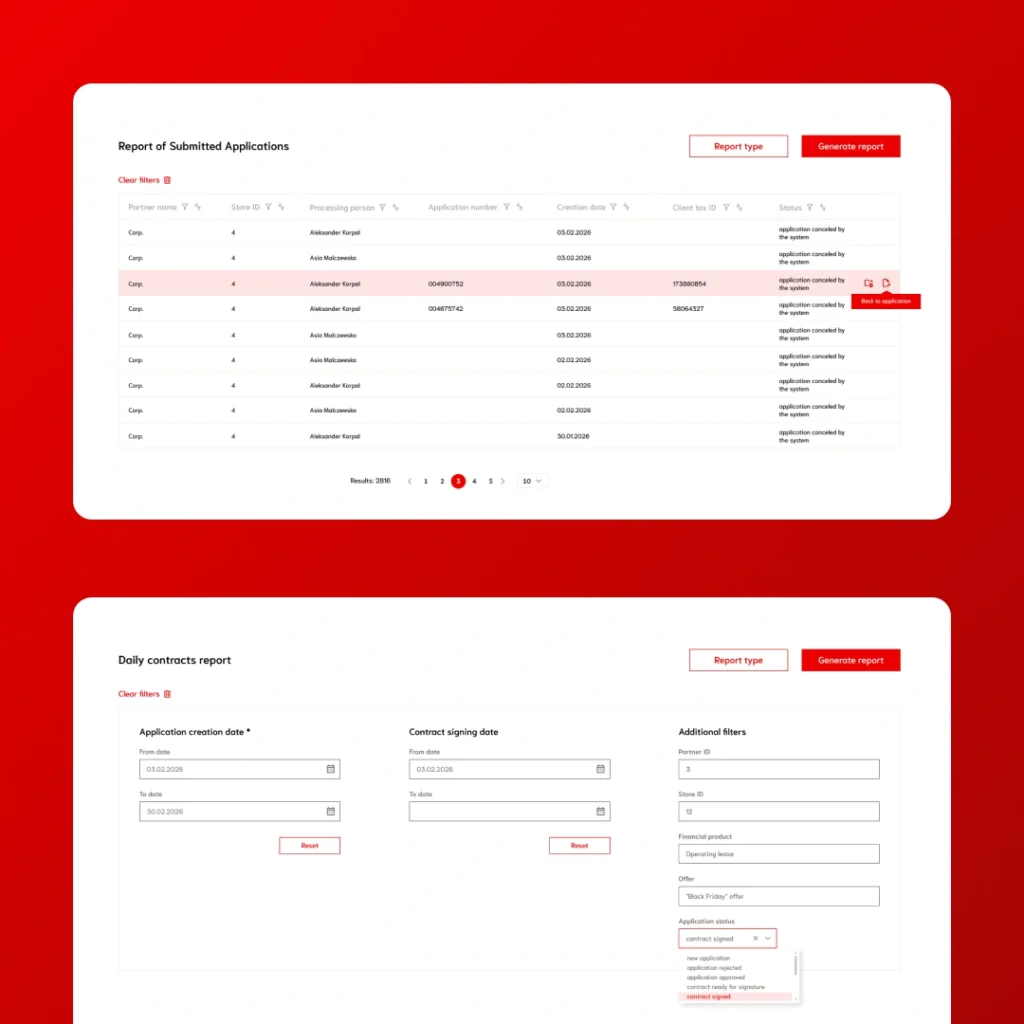
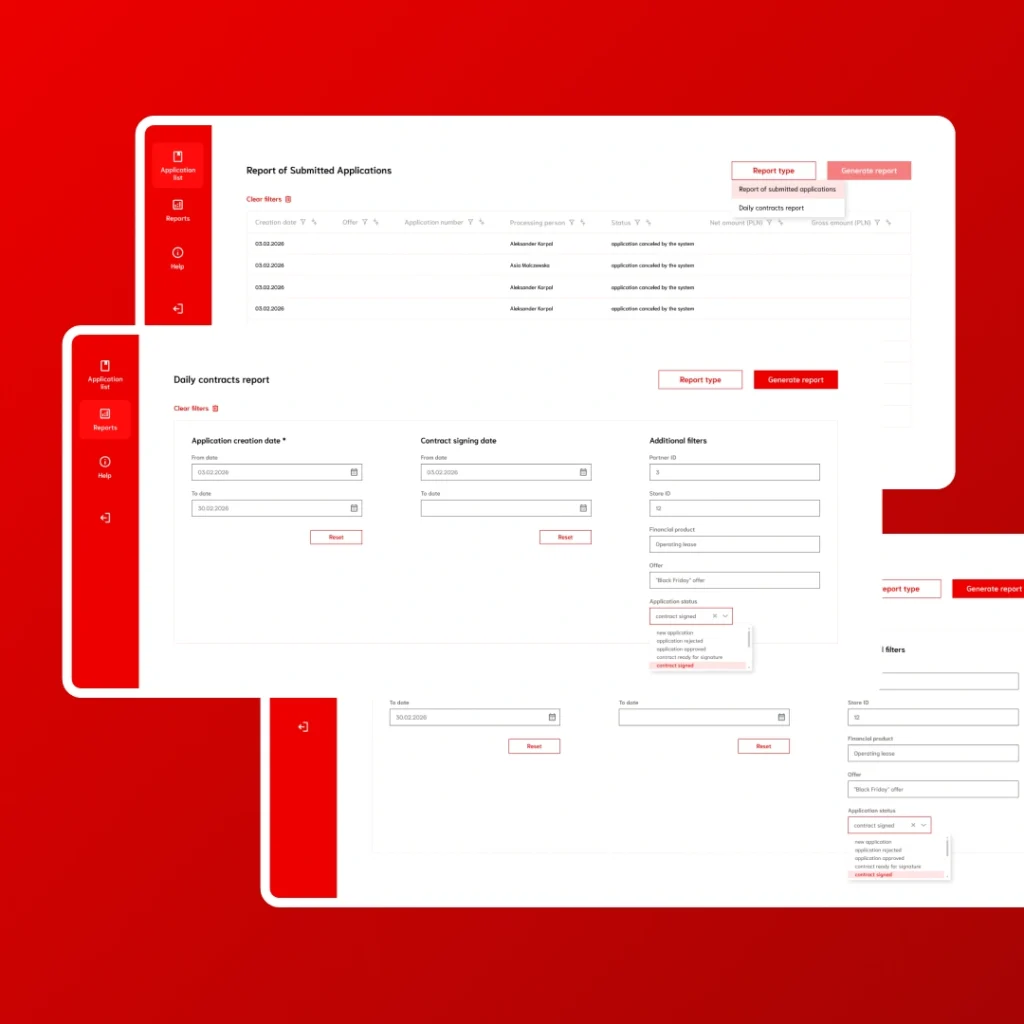
Altkom Software implemented Altkom Loan Origination (ALO) to automate the leasing journey from application submission to contract execution and establish a more scalable operating model across channels.
ALO acted as the orchestration layer for the process, coordinating execution across core and supporting systems. Its API-first approach enabled structured data exchange, reduced integration friction and strengthened the foundation for digital and partner-driven financing journeys.
Low-code configuration made it easier to adapt decision rules, workflows and product variants, reducing dependency on heavy redevelopment and accelerating the rollout of process and product changes.
As a result, the client reduced decision time by 45%, shortened processing time from 7 days to less than 24 hours, lowered operational costs by 30%, and accelerated time-to-market for new products from 6 months to 6–8 weeks.

FAQ
What customers ask most often?
In this project, processing time was reduced from 7 days to less than 24 hours. The improvement was supported by a unified workflow, process automation and configured business and decision rules. The result achievable in another organisation will depend on the starting process, the amount of manual work and the existing integration landscape.