

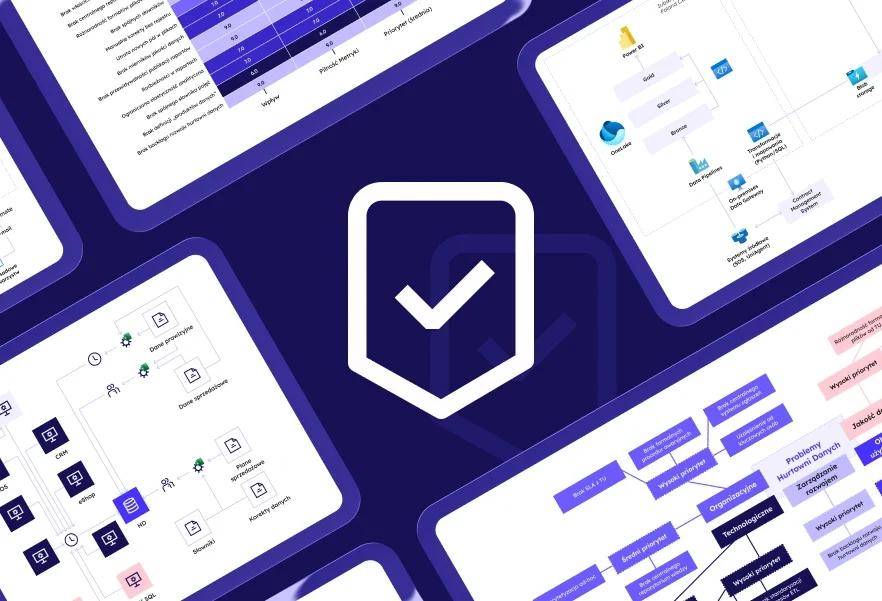
New data warehouse concept and roadmap for a multi-carrier insurance agency
OUTCOMES
What did the data warehouse audit deliver?
Clear view
of cost and value
Analysis showed where the data warehouse supported the business and where it mainly added cost, complexity, and manual work. The client gained a clearer view of its reports, data models, and areas requiring change.
Shared
business–IT view
Project work clarified how business and IT teams discuss data and divide responsibility for its development. Both sides also aligned around a shared view of the data environment, creating a solid foundation for future work.
Next-phase
direction
Findings from the analysis helped the client decide to build a new data warehouse. Project materials set the direction for the next stage and helped the organization prepare for implementation.
PROJECT
Why did the agency audit its data warehouse?
One of Poland’s largest multi-carrier insurance agencies had been developing its data warehouse for years, adapting it to the growing scale of its operations and evolving business needs. Over time, the environment became difficult to develop further and increasingly hard to understand from both business and IT perspectives.
Project goals included organizing the current-state view, identifying the main barriers, and preparing a concept for the target data environment. Analysis covered areas such as commission settlements, sales reporting, and processing data provided by insurance carriers.
PROJECT TIME
2 months
INDUSTRY
Insurance
COUNTRY
Poland
SERVICES AND SOLUTIONS
The client
Who we supported
Our client, one of the largest multi-carrier insurance agencies in Poland, serves individual and business customers through a network of agents working with several dozen insurance carriers.
REQUIREMENTS
Business challenges
- No consistent vision
Developed over many years, the data environment had gradually grown in technical and organizational complexity. - Hundreds of reports
Numerous reports existed across the organization, but there was no clear understanding of which were actually used or which supported business decisions. - Limited trust in data
Lack of transparency across the environment made it difficult to assess the quality of data used by the business. - No shared view
Business and IT teams were not working from a common understanding of data ownership or the future direction of the data warehouse. - Manual processing
Much of the work related to data imports, data corrections, and reporting still depended on manual activities.
ACTIONS
How was the data warehouse audit carried out?
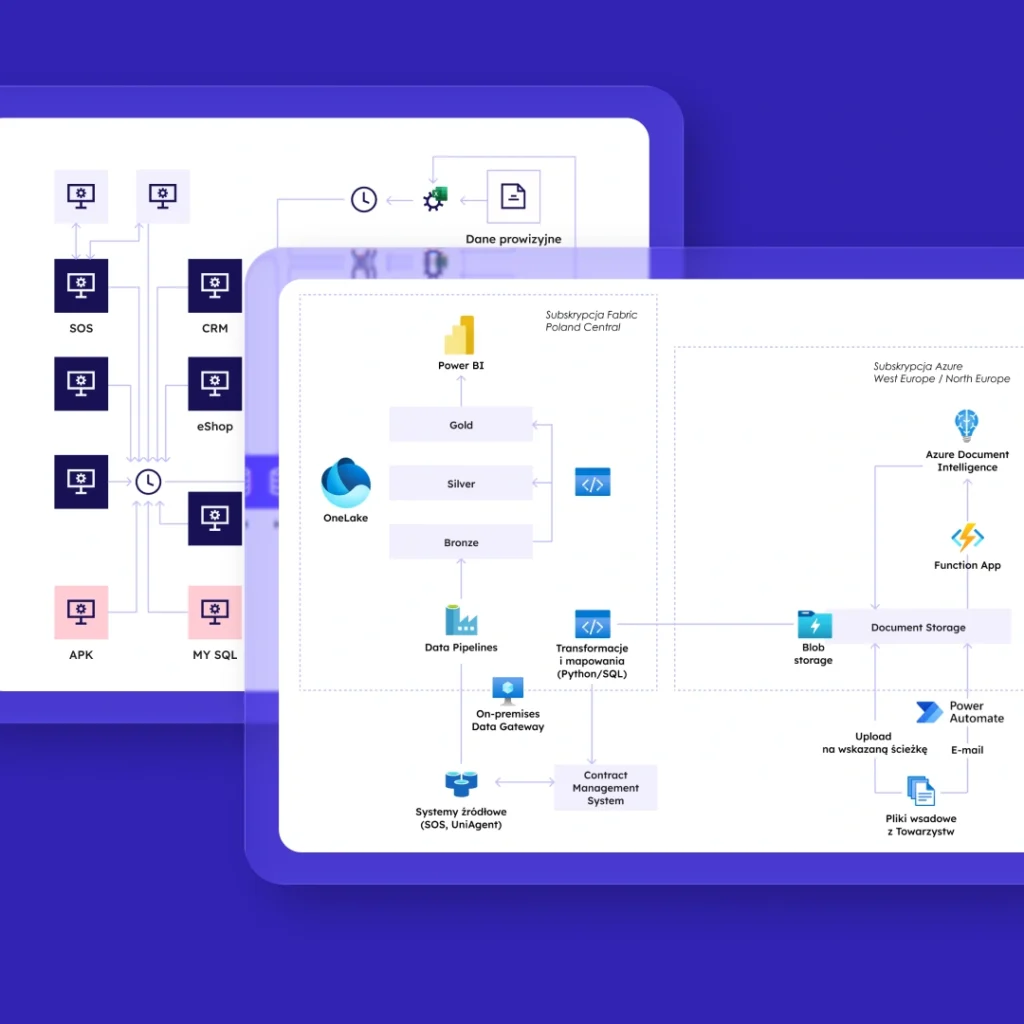
We started by analyzing existing reports, data models, data sources, and data warehouse ingestion methods. The goal was to understand how the environment worked in practice and which areas created the most complexity and risk.
SOLUTION
Scope of work
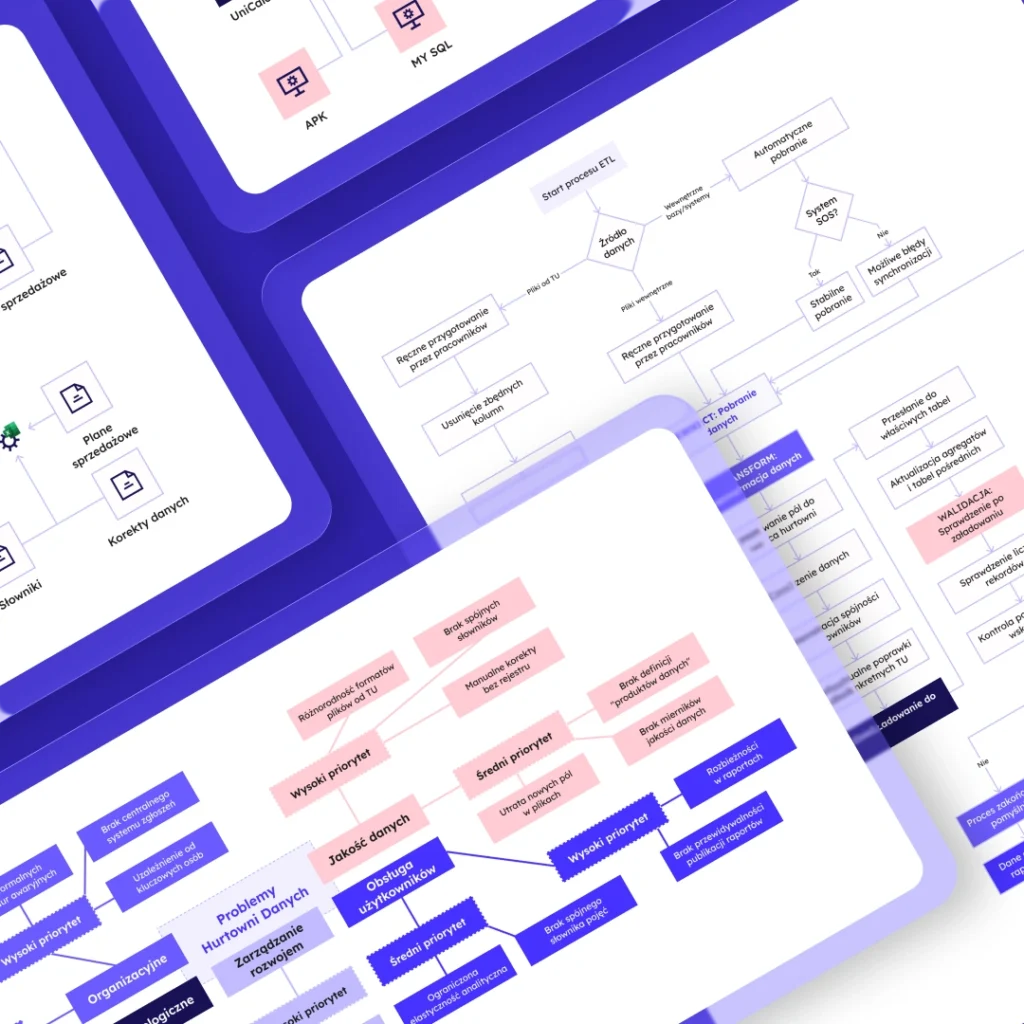
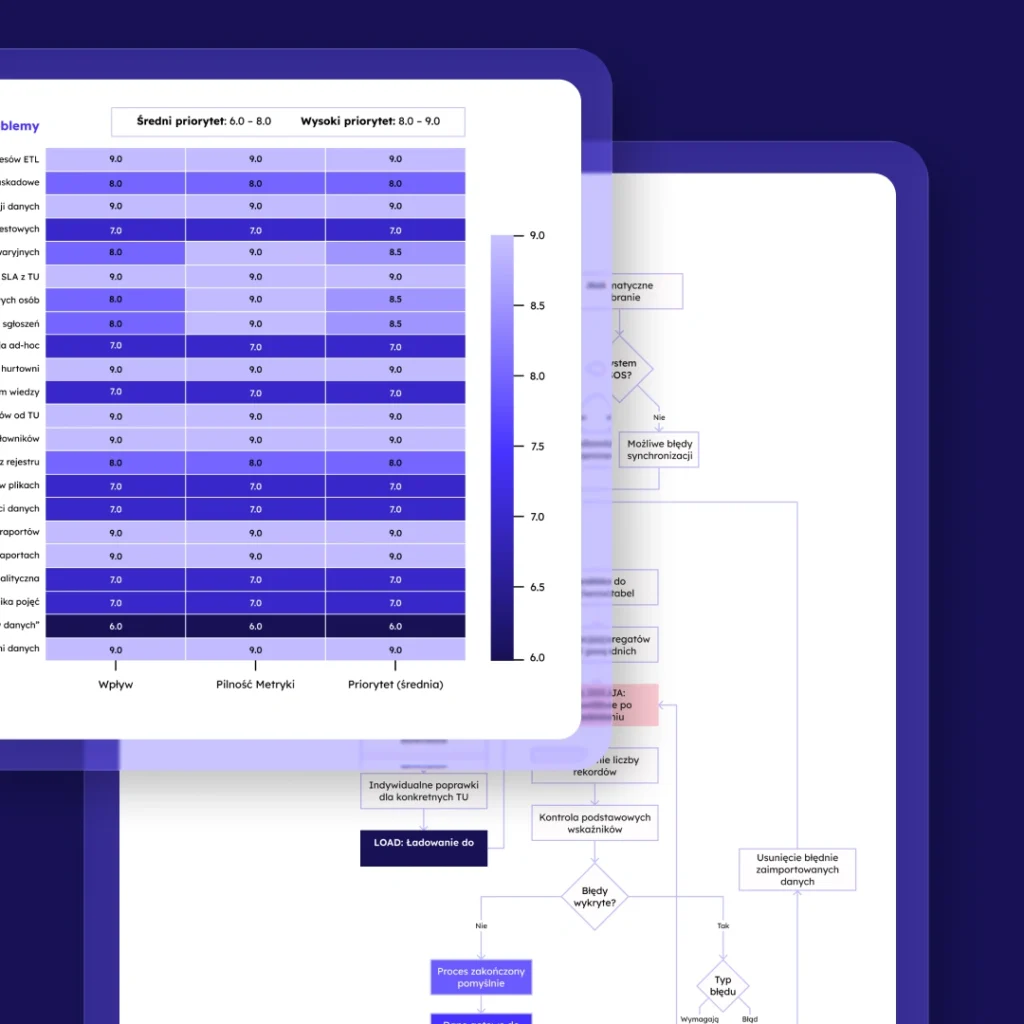
As part of the project, we prepared a current-state assessment of the data warehouse, covering environment architecture, data sources, ingestion logic, ETL processes, reporting, and the roles and responsibilities involved in maintaining it. We also identified areas of manual work, data inconsistencies, and risks that made further development of the environment more difficult.
Building on this work, we developed business and technical requirements for the new data warehouse, along with architectural assumptions. We also prepared recommendations for reporting, data governance, monitoring, security, historical data management, archiving, and data migration, as well as options for further project delivery.
This approach made it possible to design the target solution without repeating the mistakes and limitations of the current environment. Final materials became a practical, phased implementation roadmap designed to deliver initial business value quickly, develop the environment in line with the client’s strategy, and carry out the change without disrupting operational continuity.

FAQ
What customers ask most often?
In this project, the audit covered the reporting layer, data models and sources, data flows and ETL processes, warehouse architecture, manual operations and the way data was actually used in reporting and day-to-day work. The exact scope of an audit will vary between organisations depending on the architecture of the data environment and where the main problems or uncertainties lie.